About lab diamond
A Comprehensive Guide to Lab-Grown Diamonds
1. Essence: Lab-grown diamonds are real diamonds, not simulated ones
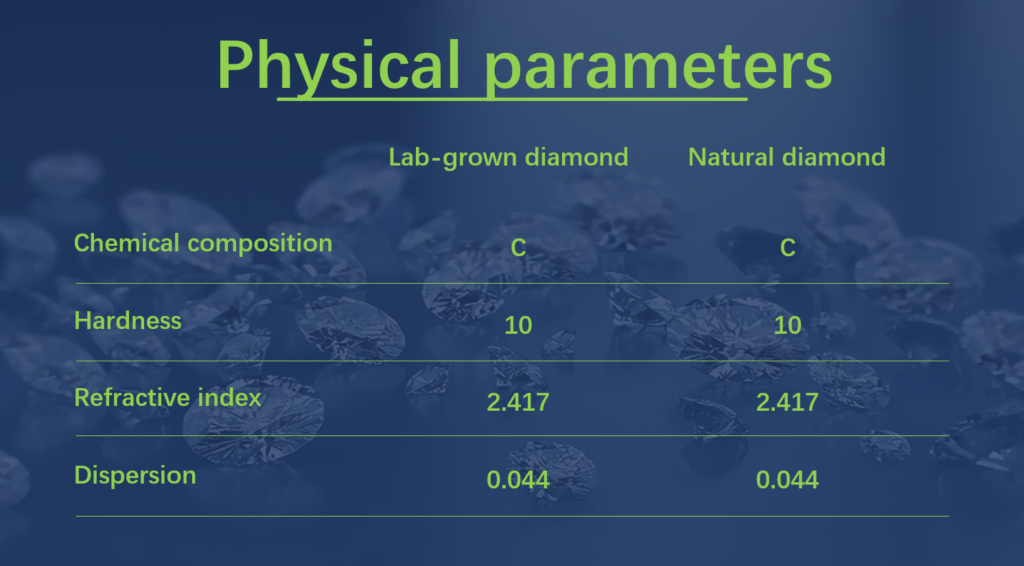
Cultivated diamonds are pure carbon diamonds grown through artificial simulation of underground conditions, with identical crystal structure, hardness, brilliance, density, and properties to natural diamonds, making them indistinguishable under diamond testing pens.
Natural diamond: formed by geological processes over hundreds of millions of years underground
Cultured diamond: Grown in a laboratory in days to weeks
– Distinguishing imitations: Moissanite, zircon, and glass have different compositions and are not diamonds
II. Two Mainstream Production Processes
1. HPHT High Pressure High Temperature Method
Simulating high temperature and high pressure underground, graphite is transformed into diamond.
Advantages: colorless, high quality, large yield, and lower price;
Drawbacks: Large carats are difficult to produce and prone to containing metallic inclusions;
Applicable: 1–3 carat daily wedding rings.
2. CVD Chemical Vapor Deposition
Carbon atoms deposit and grow layer by layer, resembling 3D printing of crystals.
Advantages: Higher clarity, larger carat sizes, and the ability to produce pink/blue-colored diamonds through cultivation;
Drawback: The raw stones often exhibit a light brown hue, requiring color modification in most cases;
Applicable to: 4 carats and above, colored diamonds, high-end customization.
III. Cultured Diamonds vs. Natural Diamonds: A Comparative Analysis
1.Price
According to the 4C standard, lab-grown diamonds are only about one-tenth the value of natural diamonds, allowing for larger carats within the same budget.
2. Appearance Quality
There is no difference in brilliance between the two, and lab-grown diamonds are easier to select with D color, high clarity, and perfect cut.
3. Environmental Protection
No mining is required, causing less damage to mountains and water resources, with carbon emissions far lower than those from natural drilling.
4. Preservation and Circulation
Natural diamonds possess scarcity, with multiple secondary recycling channels, while lab-grown diamonds are mass-produced, suffer high depreciation in the secondary market, and are unsuitable for investment or collection.
5. Symbolism
Natural diamonds highlight their rarity from a billion-year natural formation, while lab-grown diamonds represent technology, purity, and high cost performance.
IV. How to Choose Certificates (Essential for Purchase)
The official certificate will clearly indicate that the diamond is lab-grown, with a laser-engraved serial number on the girdle, ensuring traceability through a unique code per diamond
IGI: The most widely recognized in the lab-grown diamond market, offering detailed information and easy traceability;
2. NGTC Inspection: Domestic authority, universally recognized for offline store re-inspection;
3. GIA: Internationally renowned, with high recognition for natural diamonds, but relatively low production of lab-grown diamond certificates.
Cultivate diamonds=real diamonds, not imitation diamonds